Download
1 / 21
210 likes | 312 Views
Dive into the early days of the United States through the first presidential inauguration, Alexander Hamilton's impactful financial strategies, and the nation's challenges including the Whiskey Rebellion and conflicts in the Northwest Territory. Explore the French Revolution's impact, Jay's Treaty, and Washington's retirement amidst political tensions. Learn about the XYZ Affair, the Alien and Sedition Acts, and the debate over states' rights during this transformative period in American history.

E N D
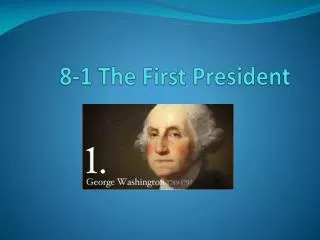
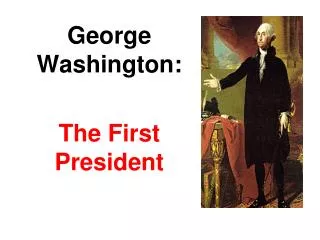
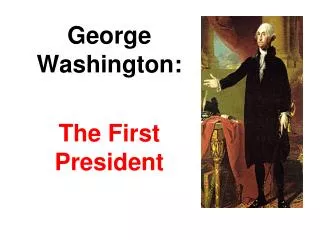
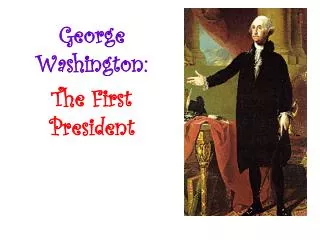
I. The First President Inauguration- Ceremony in which president takes the oath of office. Precedent- Action that serves as an example
A. Executive Branch ( Pres) • 1. Created four depts of the executive branch • a. Treasury- Hamilton • b. War- Knox • c. State- Jefferson • d. Attorney General- Randolph
III. Hamilton’s Financial Plan • A. Paying the Debt • 1. AH felt paying off the debt would give new govt credibility • 2. So
B. Establishing the Judiciary • 1. Congress passed the Judiciary Act of 1789 • 2. This act created the Supreme Co
II. Nation’s 1st Economic Crisis • 1. Nation was $52 million in debt • 2. Speculators- Bought bonds from former buyers hoping to make a profit. • 3. Should govt. pay speculators?
III. Hamilton’s Financial Plan • A. Paying the Debt • 1. Hamilton felt paying off the debt would give govt. credibility • 2. South disagreed- They paid their debt, why couldn’t other states? • 3. South agreed to this only after an agreement was made to put the capital in the South.
B. National Bank • 1. Would issue paper $ • 2. Hold govt. deposits • 3. Some said bank was unconstitutional • 4. Strict vs. Loose Construction • 5. Bank was est. in 1791
C. High Tariff • 1. Tax imported goods • 2. Raise $ • 3. Protect domestic goods. Didn’t pass because Southerns disagreed.
IV. The Whiskey Rebellion • 1. Congress imposed a tax on all whiskey. • 2. Farmers were mad. Compared Congress to the Brits. Many refused to pay. • 3. 1794 farmers rebelled – burned house of tax collector. • 4. Washington led 13,000 troops to put down rebellion. • 5. Precedent by Washington?
Section 8.3 • I. Conflicts in the NW Territory • A. A struggle over lands • 1. Indians opposed white settlement of their lands. • 2. U.S. govt tried to force Indians to sell their lands.
B. A Series of Battles • 1. GW sent troops to end Indian resistance • 2. US troops were soundly beaten by Little Turtle and Blue Jacket. • 3. GW sent Anthony Wayne to lead troops. • 4. Wayne defeated Indians at the Battle of Fallen Timbers. • 5. Treaty of Greenville gave US most of Ohio.
II. The French REvolution • 1. France revolted against their monarchy. • 2. Most in US supported the revolt at first. • 3. Later on. . .
4. France and GB were at war. • 5. U.S. wanted to stay neutral, but they also wanted to continue trading w/ both countries.
III. Jay’s Treaty • 1. U.S. agreed to pay debts to GB merchants. • 2. GB agreed to pay for ships seized. • 3. GB agreed to w/draw troops from NW Terr. • 4. GB agreed to stop aiding Indians there.
IV. Washington Retires From Public Life • 1. Warned against political factions and getting involved in foreign affairs.
Section 8.4 • I. Troubles with France • A. XYZ Affair • 1. Three guys from France demanded a bribe to talk with US diplomats. • 2. Ticked US off.
B. War Fever • 1. Adams asked Congress for increase in army and to rebuild the navy. • 2. Napoleon agreed to stop seizing US ships. • 3. War was officially avoided.
II. The Alien and Sedition Acts • A. Alien Act • 1. Increased time one had to be in the US to become a citizen from 5 years to 14. • 2. President could deport or imprison any alien he thought was dangerous.
B. Sedition Act • 1. Made it a crime to write or say anything insulting or false about the govt.
III. States’ Rights • 1. Republicans felt that the Alien and Sedition Acts were unconstitutional. • 2. Believed in states’ rights. • 3. Believe that states could nullify laws passed by Congress if they disagreed with them.