Features of Gram-Positive and Gram-Negative Bacteria: Membrane Structures and Functions
20 likes | 189 Views
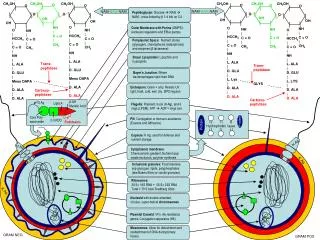
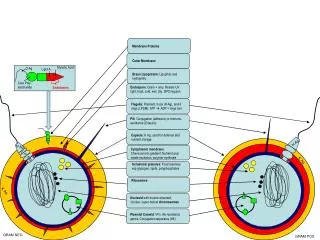
This detailed overview explores essential characteristics of Gram-positive and Gram-negative bacteria, focusing on membrane proteins such as Braun lipoproteins and their roles in maintaining the cell structure. It addresses the importance of the endospore in resisting extreme environmental conditions, the structure of pili for conjugation and immuno-avoidance, and the composition of capsules for defense. Additionally, it examines the cytoplasmic membrane functionality, nutrient acquisition, and waste exclusion. Insights on ribosomes, nucleoid structure, and plasmids highlight bacterial genetic adaptability and antibiotic resistance.


Features of Gram-Positive and Gram-Negative Bacteria: Membrane Structures and Functions
E N D
Presentation Transcript
Membrane Proteins Outer Membrane Braun Lipoprotein: Lipophilic and hydrophilic Endospore: Gram + only. Resists UV light, heat, cold, wet, dry. SPO regulon Myristic Acid O Ag Lipid A Flagella: Filament, hook (H Ag), and 4 rings (LPSM); ATP ADP = rings turn Core Poly-saccharide Pili: Conjugation (adhesins) or Immuno-avoidance (Evasins) Endotoxins Capsule: K Ag; used for defense and nutrient storage H Ag H Ag Cytoplasmic membrane: Chemiosmotic gradient, Nutrient acq/ waste exclusion, polymer synthesis L P S M K Ag Inclusions/ granules: Food reserves, esp glycogen, lipids, polyphosphates Ribosomes K Ag Nucleoid with double-stranded, circular, super-helical chromosomes Plasmid/ Cosmid: VFs, Ab-resistance genes, Conjugation apparatus (Hfr) GRAM NEG GRAM POS