Understanding Propaganda: Techniques, Types, and Historical Context
Propaganda is the intentional dissemination of misleading information to further political interests or control public perception. It seeks to alter people's understanding of issues, influencing their actions and beliefs. Common techniques include name-calling, glittering generalities, testimonials, and fear tactics. The Office of War Information (OWI) during WWII exemplified government propaganda efforts aimed at recruitment and public unification. This article explores the role of these techniques, the nature of propaganda, and its implications in shaping society's opinions.

Understanding Propaganda: Techniques, Types, and Historical Context
E N D
Presentation Transcript
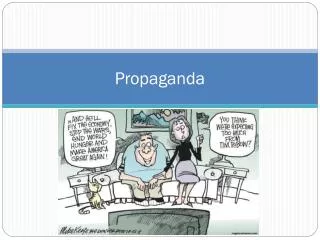
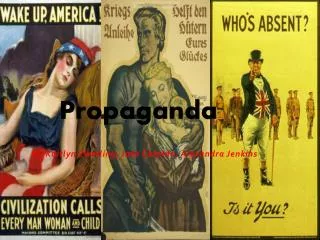
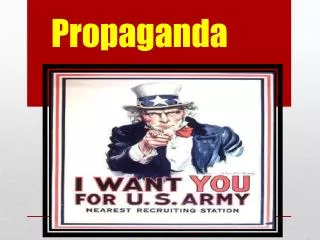
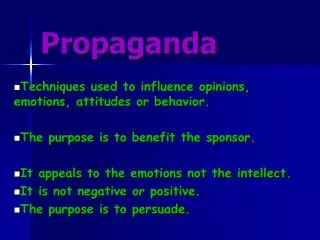
Propaganda • is the deliberately false or misleading information that supports a political cause or the interest of those in power • seeks to change the way people understand an issue or situation, for the purpose of changing their actions or expectations • May use both language and imagery to convey its messages
Common Types of Propaganda • Name-Calling • Glittering Generalities • Transfer • Testimonial • Bandwagon • Plain Folks • Fear • Logical Fallacies • Euphemism
WWII Propaganda • Office of War Information was created in 1942 to both craft and disseminate the government’s message. • Stated goals of OWI were recruitment, financing the war effort, unifying the public behind the war effort and eliminating dissent of all kinds, resource conservation, and factory production of war materials.
Propaganda Name some other forms of propaganda?
Journal • Write about a situation for which you might use propaganda techniques to influence others. • Is all language propaganda? Why or why not?