Download

1 / 13
130 likes | 238 Views
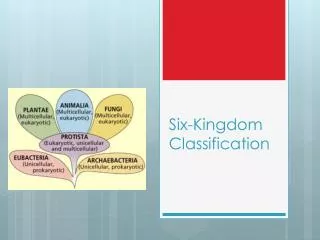
This presentation delves into the six kingdoms of life, focusing on plants, protists, fungi, and bacteria. Discover the unique characteristics of these diverse organisms, such as plant cell walls, photosynthesis in algae, and the roles of fungi in medicine and food. Learn about the intricacies of eubacteria and archaebacteria, including their vital roles in nutrient cycling and their adaptations to extreme environments. By understanding these kingdom classifications, we gain insight into the complexity and interdependence of life on Earth.

E N D
six kingdom power point By chase thompson
plant • All plants have cell walls • Plants mostly get there energy from the sun • They contain chloroplasts which makes them green • Asexual reproduction • 300-315 thousands species • Some plants only bloom once • Used in medicines and drugs • Also a can be used for food
animal • They are multicellular • They are eukaryotic organisms • Heterotroph • Most are motile • Reproduces sexually • They develop • They under go metamorphosis • Kingdom animalia or metazoa
protist • In the kingdom protista • unicellular • Photosynthetic • They are algea • In the ocean they are plankton • Cause disease • They have no tissue • Primary producer
fungi • They are eukaryotic • They are bacteria • EX: yeast and mold • They have cell walls • The cell walls are made of chitin • Used in antibiotics • They can mold on about any food • Fungus means mushroom
Archaebacteria • They are methane-producing bacteria • They have a protein like cell wall • use minerals instead of organic compounds • Can tolerate heats up to88 degrees • Eukaryote cells • Archaeand bacteria are quite similar in size and shape • few archaea have very strange or unusual shapes • lived in harsh environments
Eubacteria • eubacteria have a wide range of shapes • Prokaryotic microorganisms • Eubacteria were among the first life forms to appear on earth • Eubacteria are vital in recycling nutrients • Eubacteria cells don’t contain a nucleus • Asexual reproduction • Eubacteria are the cause of many diseases • Reproduce very fast